Blog
Proprietary Blend Meaning: What a 200 mg Blend Hides
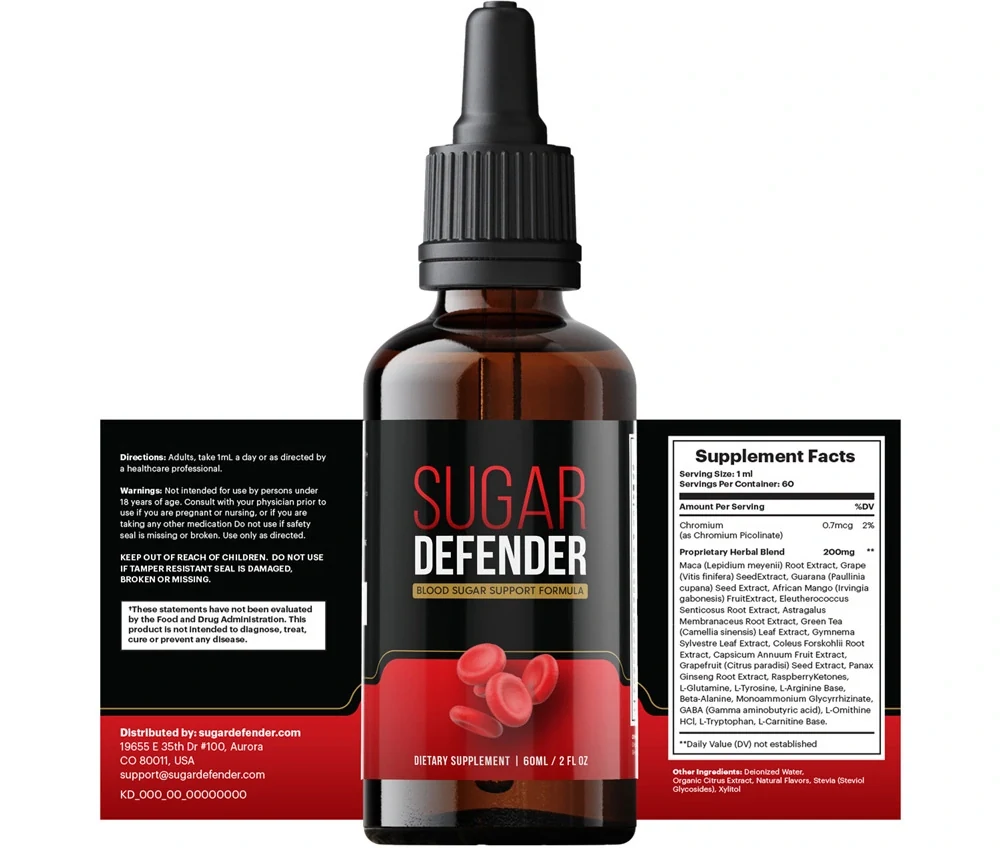
Proprietary blend meaning is simple: the label prints one total weight and lists the ingredients without their own amounts. Sugar Defender's blend is 200 mg across 22 ingredients, in order from most to least. The ingredient in place k holds at most 200 divided by k mg per mL.
Written by the Sugar Defender label teamUpdated · 4 min read
Definition01
What is the proprietary blend meaning on a supplement label?
A proprietary blend is a group of ingredients shown with one combined weight. The maker does not have to say how much of each ingredient is inside.
US rules allow this. Under 21 CFR 101.36, a supplement may list a proprietary blend with its total weight and its ingredients in descending order of predominance by weight (21 CFR 101.36 (eCFR)).
Think of a fruit salad sold by the bowl. You know the bowl's weight, but not how much is grape and how much is melon. The first fruit named is the biggest, and the last is the smallest.
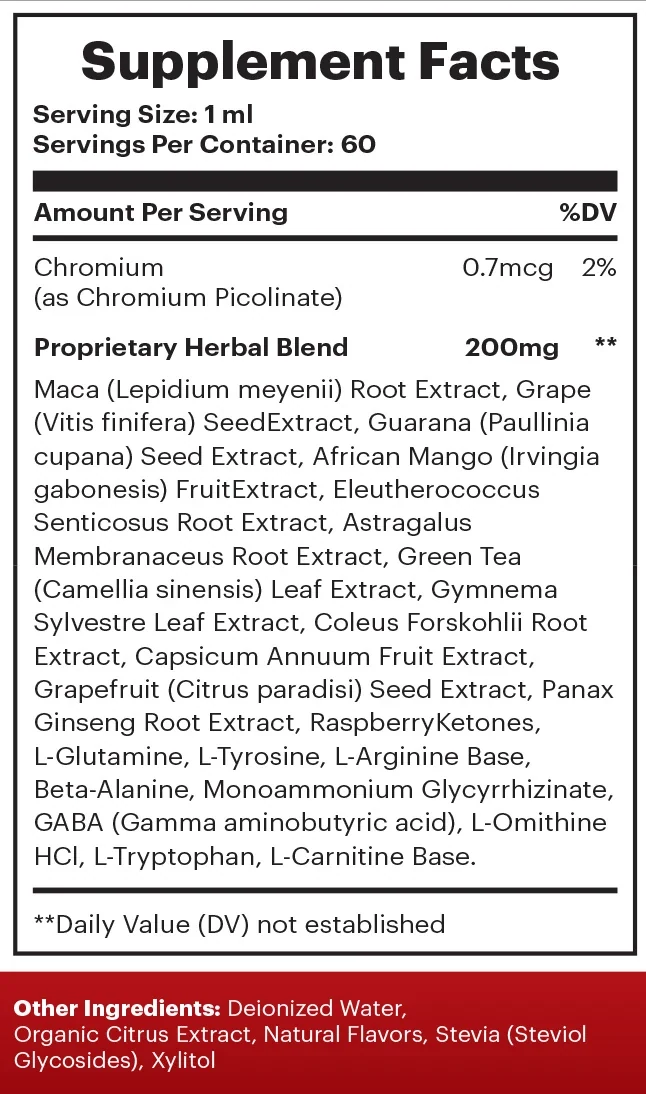
So the one number you can trust is the total. The Sugar Defender panel reads "Proprietary Herbal Blend 200 mg" and then names 22 ingredients with no individual weights.
The clue02
How do you read a proprietary blend by weight order?
Read it as a ranking. The first ingredient weighs the most, and each next one weighs the same or less.
That order gives a ceiling for every line. The ingredient in place k cannot hold more than 200 divided by k mg, because k ingredients at or above that weight would already fill the blend.
It also gives a middle guide. An even split of 200 mg across 22 ingredients is about 9 mg each per 1 mL serving.
Tap a number to read that part of the panel.
- Serving
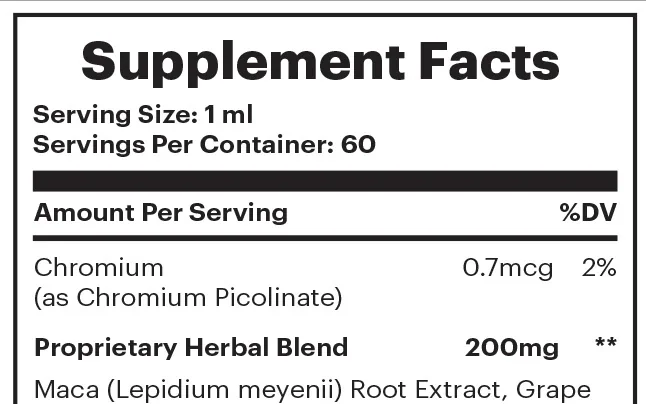
Serving Size: 1 ml. Servings Per Container: 60.
- Chromium, 0.7 mcg
The only printed amount: 2% of the 35 mcg Daily Value.
- Blend total
200 mg shared by 22 ingredients, listed from most to least by weight.
- Maca first
Maca is listed first, so it is the largest share. Each later line can hold at most 200/k mg.
- Amino acids
Eight amino acids sit in the bottom half of the list, the smallest shares.
- DV note
'Daily Value (DV) not established' for the blend.
- Other ingredients
Deionized water, organic citrus extract, natural flavors, stevia and xylitol. Xylitol is dangerous to dogs.
Worked examples03
What can a 200 mg blend hide?
It can hide the gap between a studied dose and a label dose. For several lines, the ceiling sits far below what researchers used.
Chromium is the exception. It sits outside the blend and prints its own amount, 0.7 mcg. That tells you the label can show a number when it wants to.
The table below uses only the label order. The ceilings are upper limits, and the true amounts are unknown.
| Ingredient | Place | At most |
|---|---|---|
| Maca root | 1st | 200 mg |
| Guarana seed | 3rd | 67 mg |
| African mango fruit | 4th | 50 mg |
| Eleuthero root | 5th | 40 mg |
| Green tea leaf | 7th | 29 mg |
| Coleus forskohlii root | 9th | 22 mg |
| Panax ginseng root | 12th | 17 mg |
| Raspberry ketones | 13th | 15 mg |
| L-carnitine base | 22nd | 9 mg |
Compare African mango at 50 mg with the 300 mg a day used in one small trial (NIH ODS, Dietary Supplements for Weight Loss), or L-carnitine at 9 mg with the 2 to 3 grams in diabetes studies (NIH ODS, Carnitine).
Why it matters04
Why do companies use proprietary blends?
Companies say blends protect a recipe. For readers, the effect is that doses cannot be checked.
Without amounts, you cannot compare a bottle to the research, to another product or to a safe limit. You also cannot tell whether a long list is mostly a small amount of each item.
Another reason is cost. Cheaper ingredients can sit at the top of a list while a pricey one appears near the bottom in a tiny amount, and the list still reads as a long formula. Nothing on the label would show it.
The same rules apply to every maker in the US, so a blend is legal. Legal is not the same as informative.
Hidden amounts make interactions harder to judge. Show the whole label to your pharmacist, and do not change a prescription because of a supplement.
What to do05
How can you judge a blend that hides its amounts?
Use the order, compare to studied doses and ask for lab proof.
Find the total
Note the blend weight and the serving size.
Divide by place
200 divided by an ingredient's place gives its ceiling.
Compare to research
Look up the dose used in studies.
Ask the seller
Request a certificate of analysis from the maker.
FDA is not authorized to approve supplements before they reach the market, so checking is up to you (FDA, Using Dietary Supplements). Start with the Sugar Defender supplement facts.
FAQ06
Proprietary blend questions
Is a proprietary blend legal?
Yes. A US supplement may list a proprietary blend with its total weight and ingredients in descending order by weight, under 21 CFR 101.36. It is legal, but it hides each amount.
Does a proprietary blend mean the ingredients are low?
Not always. It only means the amounts are not printed. Label order sets a ceiling for each, and in a 22-ingredient, 200 mg blend most ceilings sit below studied doses.
How can I tell how much of an ingredient a blend holds?
You cannot know exactly. Divide the blend weight by the ingredient's place for a maximum, or divide by the count for an even split. Only the maker can supply true amounts.
Who wrote this07
Written and reviewed by
Pages built from the label, the sales page and linked NIH, FDA, CDC, FTC and peer-reviewed sources.
Last updated . Read our editorial standards and the way we check reviews. This website is run by an authorized American Sugar Defender outlet, not by the manufacturer or the distributor. Purchases made through our order links earn us money.
Keep reading
More about Sugar Defender
Authorized American Sugar Defender outlet
Ready to try Sugar Defender?
Start with a medicine check, then pick a pack. Three or six bottles ship free in the US at a lower price per bottle, and every pack carries the 60-day money-back guarantee.
- Secure checkout
- 60-day money-back guarantee
- Ships from the U.S., free on 3 or 6