Blog
Sugar Defender Fact Check: 7 Claims Tested Against Sources
A Sugar Defender fact check compares what the sales page says with what the label shows and what public sources report. The headline claims go further than the evidence: no trial tested the drops, the doses are small, and a VERIFY check rated an ad's diabetes claim false.
Written by the Sugar Defender label teamUpdated · 4 min read
Method01
How do you fact check a supplement's claims?
You put each claim beside three things: the label, the dose in studies and what public health bodies say.
We quote the sales page exactly, then test the words. We use the label as the final word on what is in the bottle, since it is the only document the maker must stand behind.
A claim passes if the label and a credible source support it. A claim fails if the dose is far lower than studied, if the evidence is mixed or if no source exists.
One more rule: a quote from a seller is not a source. A source is a study, an agency page or a news check that you can open and read yourself. Where we cite one, the number sits right beside the claim.
We make no ranking of our own and print no rating. This is a check of words, not a test of the drops.
The seven claims02
Which Sugar Defender claims hold up?
Few of the headline claims hold up on the evidence we can check. The ones about energy and herbs lean on small or mixed studies, at doses the bottle does not show.
The sales page headline reads "The #1 Rated Blood Sugar Formula". It names no ranking source, and no trial has tested the product (NCCIH, Diabetes and Dietary Supplements). The sub-headline mentions "24 proven ingredients". The page names 8, the label has 23 lines, and none is proven at these doses.
Other lines are more specific. The ingredient notes on the page claim a coleus "Fat Burning Aid" and an African mango "Fat Burning Agent". The hidden blend sizes mean those herbs sit at small, unstated amounts, and the evidence for both is thin (MSKCC, Forskolin (Coleus forskohlii)).
Tap each row to see the claim and the evidence.
- Headline“The #1 Rated Blood Sugar Formula”No ranking body, test or rating source is named. No trial has tested Sugar Defender, and no supplement treats diabetes. (NCCIH, Diabetes and Dietary Supplements) (VERIFY (10TV), Sugar Defender claim check)
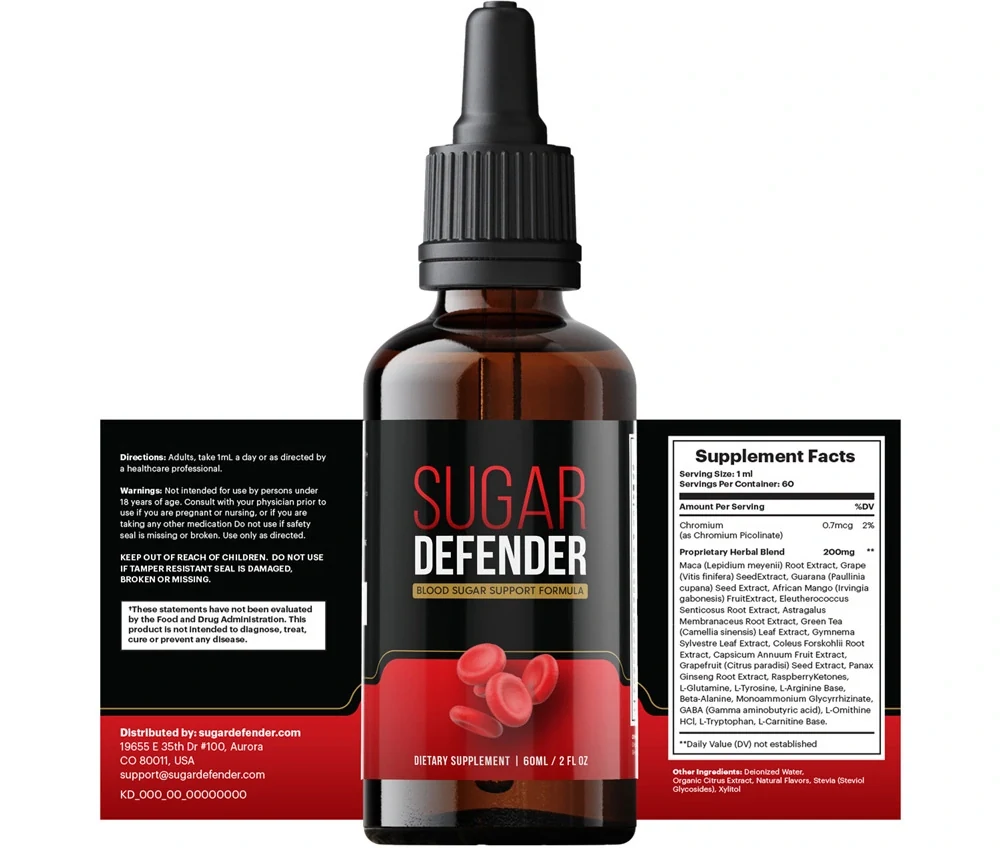
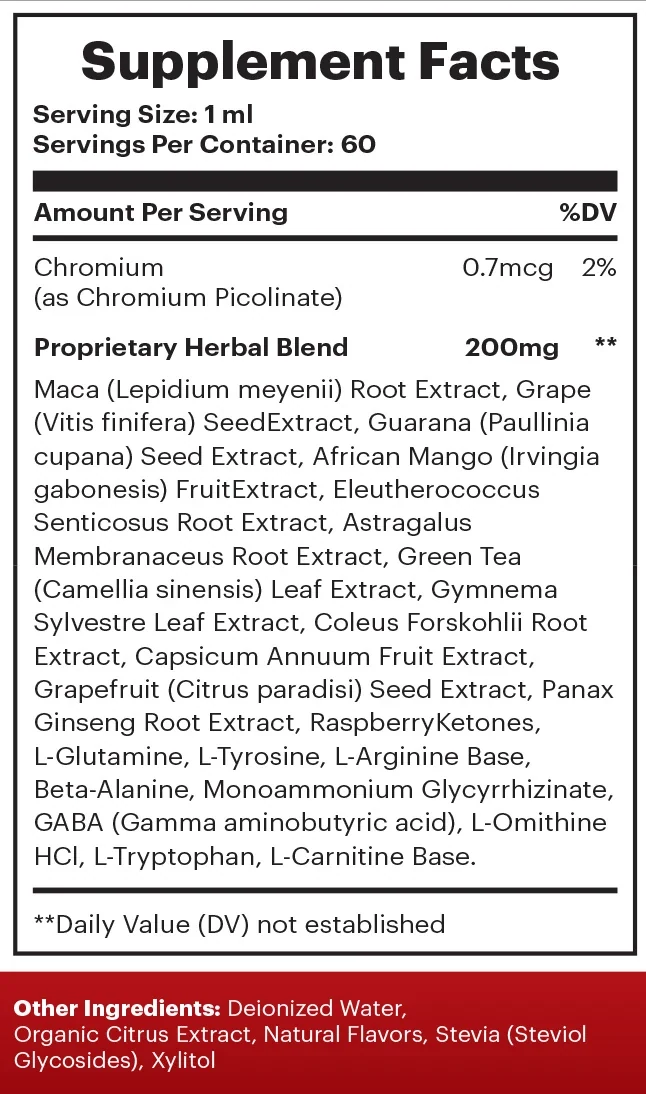
- Sub-headlineAn “advanced blend of 24 proven ingredients”The page then names 8, and the label has 23 lines: chromium plus a 22-ingredient blend. None is proven for blood sugar at these doses. (Sugar Defender sales and order pages) (ADA, Vitamins & Supplements)
- Chromium copyChromium “Reduces Obesity & Lowers Blood Pressure”NIH finds mixed, small glucose effects at 200-1,000 mcg and no reliable weight effect. The drops hold 0.7 mcg per mL. (NIH ODS, Chromium) (NIH ODS, Dietary Supplements for Weight Loss)
- Coleus and mango copyColeus as a “Fat Burning Aid”, African mango as a “Fat Burning Agent”Small trials show weak or no weight effect for either, per NIH and MSKCC. (NIH ODS, Dietary Supplements for Weight Loss) (MSKCC, Forskolin (Coleus forskohlii)) (MSKCC, Irvingia gabonensis (African mango))
- Guarana copyGuarana “Stimulates Your Metabolism”Guarana is a caffeine source. Caffeine wakes you up; it is not a blood sugar or weight treatment, and no caffeine amount is printed. (MSKCC, Guarana) (FDA, Caffeine: how much is too much?)
- Rating line“96% Of Customers Order 6 Bottles” and a near-perfect star scoreNeither figure names a source or a count we can check. The FTC bans fake or unsupported reviews and ratings. (FTC, Final rule banning fake reviews) (FTC, How To Evaluate Online Reviews)
- Bottle front“Blood Sugar Support Formula” with the FDA statementStructure/function wording, allowed with the FDA disclaimer. It is not a disease claim. (FDA, Using Dietary Supplements)
Claims as printed on the sales and order pages (Sugar Defender sales and order pages) and the label. Health claims need solid scientific evidence that is competent and reliable, generally human trials of the same product (FTC, Health Products Compliance Guidance).
The ad check03
What did the VERIFY fact check find about Sugar Defender?
VERIFY, a news fact-checking service, rated false an ad claim that Sugar Defender can end diabetes (VERIFY (10TV), Sugar Defender claim check).
The check also listed red flags around the sales material: unverified testimonials, a creator named "Tom Green" with no credible biography found, reused testimonial photos, and complaints on BBB and scam-tracker sites.
The brand's own site does not make that claim. The false claim lives in outside ads, and the FTC lists fake celebrity endorsements among common supplement-ad tactics (FTC, Fake celebrity endorsements).
| Source | Example | Status |
|---|---|---|
| Outside ad | Diabetes claim | Rated false |
| Sales page | "Fat Burning Aid" for coleus | Not supported at label doses (MSKCC, Forskolin (Coleus forskohlii)) |
| Label | Chromium 0.7 mcg, blend 200 mg | Printed facts |
| Brand website | No diabetes treatment claim | Consistent with label |
Takeaway04
What should you take from this Sugar Defender fact check?
Treat the label as fact and the sales copy as opinion.
That gap is the whole story. A bold line on a sales page costs nothing to write. A study costs years. When the two do not match, believe the study.
The label is open and the return terms are fair. The claims around it are bigger than the proof. Chromium studies used 200 to 1,000 mcg a day and had mixed results (NIH ODS, Chromium), and the bottle holds 0.7 mcg.
- Quote, then check: every big claim needs a source you can open
- Prefer the label to the ad
- Ask the seller for a lab report for your lot
Keep taking prescribed medicine, and talk with a doctor before adding a supplement. Read more on the Sugar Defender benefits page.
FAQ05
Sugar Defender fact check: quick questions
Is Sugar Defender really the number one rated blood sugar formula?
No source for that ranking is named. We cannot confirm it, and no trial has tested the product. Treat it as sales wording, not a finding.
Are there really 24 proven ingredients in Sugar Defender?
No. The sales page names 8 ingredients, the label lists 23 lines, and none is proven at the doses the bottle allows. The word proven is not supported.
Who rated the diabetes claim in the Sugar Defender ad as false?
VERIFY, a fact-checking service from 10TV, rated it false. It also noted unverified testimonials and reused photos in the sales material.
Does this fact check test the drops in a lab?
No. It checks claims against the label and public sources. No lab report for the drops is published, and we did not run one.
Who wrote this06
Written and reviewed by
Pages built from the label, the sales page and linked NIH, FDA, CDC, FTC and peer-reviewed sources.
Last updated . Read our editorial standards and the way we check reviews. This website is run by an authorized American Sugar Defender outlet, not by the manufacturer or the distributor. Purchases made through our order links earn us money.
Keep reading
More about Sugar Defender
Authorized American Sugar Defender outlet
Ready to try Sugar Defender?
Start with a medicine check, then pick a pack. Three or six bottles ship free in the US at a lower price per bottle, and every pack carries the 60-day money-back guarantee.
- Secure checkout
- 60-day money-back guarantee
- Ships from the U.S., free on 3 or 6