Blog
Sugar Defender With Insulin: Low Blood Sugar Risks to Know
Sugar Defender with insulin is a combination to clear with your care team first. Chromium may add to the effect of insulin and other diabetes drugs, which raises the risk of low blood sugar. The label tells anyone on other medication to consult a physician. No safety study of the product exists.
Written by the Sugar Defender label teamUpdated · 4 min read
The short answer01
Can you take Sugar Defender with insulin?
Ask your doctor or diabetes care team before you take Sugar Defender with insulin. The label says to consult a physician first if you take any other medication.
Insulin works hard and fast. Anything that might add to it deserves a plan, because a low can come on quickly.
People who use insulin already balance food, activity and dose every day. Adding a new product changes one more variable, and that is why a plan matters more than a guess.
No safety study of Sugar Defender exists, with or without insulin. So the sources below describe the ingredients, not the finished product.
The reason02
Why could Sugar Defender add to insulin's effect?
Some ingredients in the formula have been studied for blood sugar. If they act as studied, they could stack on top of insulin.
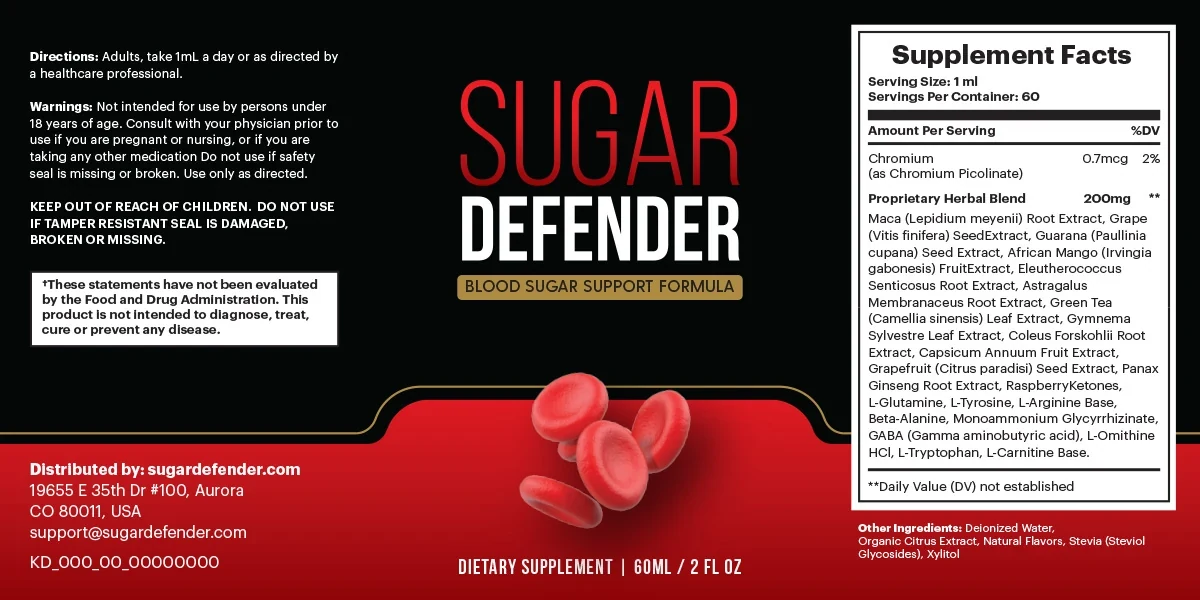
Chromium may add to the effect of insulin and other diabetes drugs, raising the risk of low blood sugar (NIH ODS, Chromium). The label lists only 0.7 mcg, far under the 200 to 1,000 mcg used in studies, so the real effect may be tiny. The caution still stands.
Gymnema and African mango carry similar notes. African mango is listed with a caution for use with diabetes drugs (MSKCC, Irvingia gabonensis (African mango)). None of these lines has a printed amount, so nobody can say how much of each reaches you.
Ginseng might lower blood sugar, and people with diabetes are told to consult a provider (NCCIH, Asian Ginseng). The label does not print the ginseng amount; it sits 12th in the blend, at most about 17 mg per mL.
| Line | Place | Why it is on this list |
|---|---|---|
| Chromium picolinate 0.7 mcg | Printed amount | May add to diabetes drugs |
| Gymnema | 8th, at most 25 mg | Studied for blood sugar |
| Panax ginseng | 12th, at most 17 mg | May lower blood sugar |
| African mango | 4th, at most 50 mg | Caution with diabetes drugs |
Know the signs03
What are the signs of low blood sugar?
Low blood sugar is below 70 mg/dL for many people with diabetes. Symptoms include shakiness, sweating, hunger, dizziness, confusion and a fast heartbeat (NIDDK, Low Blood Glucose).
The usual step is the 15-15 rule: take 15 grams of fast-acting carbohydrate, then recheck in 15 minutes (ADA, Low Blood Glucose). Your care team may give you a different plan, so follow theirs.
A severe low is an emergency. Call 911 if a person passes out, has a seizure or cannot swallow.
- Shaky or jitteryTrembling hands, feeling nervous
- Sweaty, chillsClammy skin out of nowhere
- Hungry, nauseousSudden strong hunger
- Dizzy, confusedTrouble thinking or speaking clearly
- Fast heartbeatPounding or racing pulse
15-15Under 70 mg/dL counts as a low for many people with diabetes. Have 15-20 g of fast carbohydrate (juice, glucose tablets) and check again 15 minutes later.
Call 911When someone with a low passes out, has a seizure or cannot safely swallow. Someone who is unconscious should not be given food or drink.
The signs and steps come from NIDDK (NIDDK, Low Blood Glucose). Lows can come from insulin, sulfonylureas and meglitinides, and supplements may add to them (ADA, Vitamins & Supplements).
A safer plan04
How should you raise it with your care team?
Tell your care team about Sugar Defender before the first dose, and bring the label. A clinician who knows about the drops can read a surprising low in context, not as a mystery.
Ask what to watch for and whether to check your glucose more often.
- Bring the bottle, or the Sugar Defender supplement facts page
- Ask which readings should prompt a call
- Tell them about any past lows
- Do not start the drops on the same day as a change in your medicine
Never stop or change insulin, metformin or any other medicine because of a supplement. No dietary supplement treats diabetes (NCCIH, Diabetes and Dietary Supplements).
The wider picture is in our guide to supplements and diabetes medicines.
FAQ05
Sugar Defender and insulin: quick questions
Will Sugar Defender replace my insulin?
No. Sugar Defender is a dietary supplement, and the label says it is not intended to diagnose, treat, cure or prevent any disease. Keep taking your insulin exactly as your doctor prescribed.
Should I check my glucose more often with Sugar Defender?
Ask your care team. Because chromium and some herbs may add to diabetes drugs, many clinicians would want closer checks when a new supplement starts. Your own plan comes first.
What do I do if I feel shaky after taking the drops?
Check your glucose if you can. If it is under 70 mg/dL, use the 15-15 rule your care team taught you, and tell them afterward. Call 911 for a severe low.
Is Sugar Defender safe for people with type 1 diabetes?
No safety study exists for any type of diabetes. Insulin dosing is delicate, so talk to your endocrinologist or care team before trying any new supplement.
Who wrote this06
Written and reviewed by
Pages built from the label, the sales page and linked NIH, FDA, CDC, FTC and peer-reviewed sources.
Last updated . Read our editorial standards and the way we check reviews. This website is run by an authorized American Sugar Defender outlet, not by the manufacturer or the distributor. Purchases made through our order links earn us money.
Keep reading
More about Sugar Defender

Authorized American Sugar Defender outlet
Ready to try Sugar Defender?
Start with a medicine check, then pick a pack. Three or six bottles ship free in the US at a lower price per bottle, and every pack carries the 60-day money-back guarantee.
- Secure checkout
- 60-day money-back guarantee
- Ships from the U.S., free on 3 or 6